
 Español
 Portugues
 Pусский
 العربية
 Türk dili
 Indonesia
 Tiếng Việt
 қазақ
қазақ فارسی
فارسی українська
 беларускі
 Filipino
 o'zbek
 български
 тоҷикӣ
 kiswahili
 Монгол
 አማራ
አማራ Ilocano
Frequent-duty high-voltage switch
Frequent-Duty High-Voltage Switch: Overview and Applications A frequent-duty high-voltage switch is a critical component in electrical power systems, designed to handle repeated operations under high-voltage conditions while maintaining reliability and safety. These switches are engineered to withstand the mechanical and electrical stresses associated with frequent switching cycles, making them ideal for applications where regular circuit interruptions or load transfers are required. Key Features 1. Robust Construction Frequent-duty high-voltage switches are built with durable materials to endure mechanical wear and electrical arcing. Contacts are often made of silver or copper alloys to ensure low resistance and high conductivity, while insulating materials like porcelain or composite polymers provide excellent dielectric strength. 2. High Electrical Performance These switches are rated for voltages ranging from several kilovolts (kV) to hundreds of kV, depending on the application. They must efficiently interrupt load currents and, in some cases, fault currents without excessive arcing or degradation. 3. Fast and Reliable Operation Designed for rapid switching, they incorporate mechanisms (spring-assisted or motor-driven) to ensure quick opening and closing, minimizing arc duration and contact erosion. Some models include arc-quenching technologies such as SF6 gas or vacuum interrupters. 4. Thermal and Mechanical Endurance Frequent-duty switches must dissipate heat effectively to prevent overheating during repeated operations. Enhanced cooling designs or heat-resistant materials are often employed to maintain performance. Applications - Power Distribution Networks: Used in substations for load switching, sectionalizing, or isolating circuits for maintenance. - Industrial Facilities: Essential for machinery requiring frequent power cycling, such as large motors or transformers. - Renewable Energy Systems: Deployed in solar or wind farms to manage power flow and grid synchronization. - Railway Electrification: Ensures reliable power switching in overhead catenary systems. Maintenance and Safety Regular inspection of contacts, insulation, and operating mechanisms is necessary to prevent failures. Proper lubrication and alignment ensure smooth mechanical operation, while periodic dielectric testing verifies insulation integrity. Conclusion Frequent-duty high-voltage switches are indispensable in modern electrical infrastructure, offering durability, efficiency, and safety in demanding environments. Their ability to perform reliably under frequent operations makes them a vital component in power systems worldwide.
Products
Category:
-
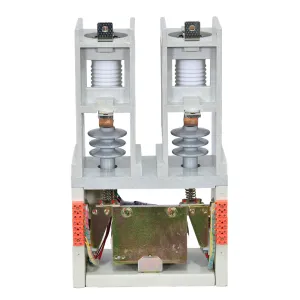
12kv Two Poles AC Vacuum Contactor Voltage Contactor
Category: Vacuum ContactorBrowse number: 1525Number:Release time: 2025-09-05 09:40:06High Voltage AC Vacuum Contactor CKG3-12, 160A–630AThe CKG3 series AC vacuum contactor (160–630A) is designed for high-voltage AC networks up to 12kV, with a frequency of 50Hz. It is ideal for long-distance circuit connection and disconnection, as well as frequent starting and stopping of AC motors. This contactor works seamlessly with various protection devices and can be assembled into a flameproof electromagnetic starter.Suitable for power distribution systems below 12kV, the CKG3 vacuum contactor can be equipped with a mechanical interlocking shaft between two units, en...
News
Category:
No search results found!
Case
Category:
No search results found!
Exhibition
Category:
No search results found!
Download
Category:
No search results found!
Job
Category:
No search results found!
Featured Products
No search results found!



 Phone
Phone